5–7 daysDuration (indicative)
10–20Group size
18–65Minimum age
EnglishLanguage of teaching
Course overview
About this course
This is the starting point for almost every drone career in India. You learn the Drone Rules, airspace zones, safe flying and basic aircraft knowledge, then fly under instructor supervision until you are ready for the remote pilot assessment. It is the Indian counterpart of an entry-level open-category certificate.
| Format | Online theory plus supervised practical flying |
| Languages | English and Hindi (other languages on request) |
| Certificate | IDA course certificate and support for the DGCA remote pilot certificate route |
| Fees | On request. Contact admissions for the current fee and batch dates. |
Who it is for
Is this course right for you?
- School and college leavers who want a drone career
- Photographers, videographers and surveyors adding drones to their work
- Farmers and agri-entrepreneurs who will operate their own aircraft
- Government and utility staff who must fly or supervise drone work
Learning outcomes
What you will be able to do
- Explain the Drone Rules, aircraft categories and who needs a remote pilot certificate
- Read the Digital Sky airspace map and tell green, yellow and red zones apart
- Carry out pre-flight checks, flight planning and post-flight records
- Recognise how weather, distance judgement and overconfidence affect safe flying
- Fly basic manoeuvres and land safely in normal and simple abnormal situations
- Prepare for the theory and practical assessment
Syllabus
What the course covers
Module 01
Aviation law and airspace
- Drone Rules and aircraft categories by weight
- Digital Sky registration, permissions and no-fly areas
- Privacy, insurance and who is liable
- Accident and incident reporting
Module 02
Human factors
- Judging distance and height
- Flying in haze, glare and low light
- Fatigue, stress and overconfidence
- Working with a visual observer
Module 03
Operating procedures
- Site assessment and flight planning
- Pre-flight, in-flight and post-flight checklists
- Return-to-home and fail-safe settings
- Logbook and maintenance records
Module 04
Aircraft and systems
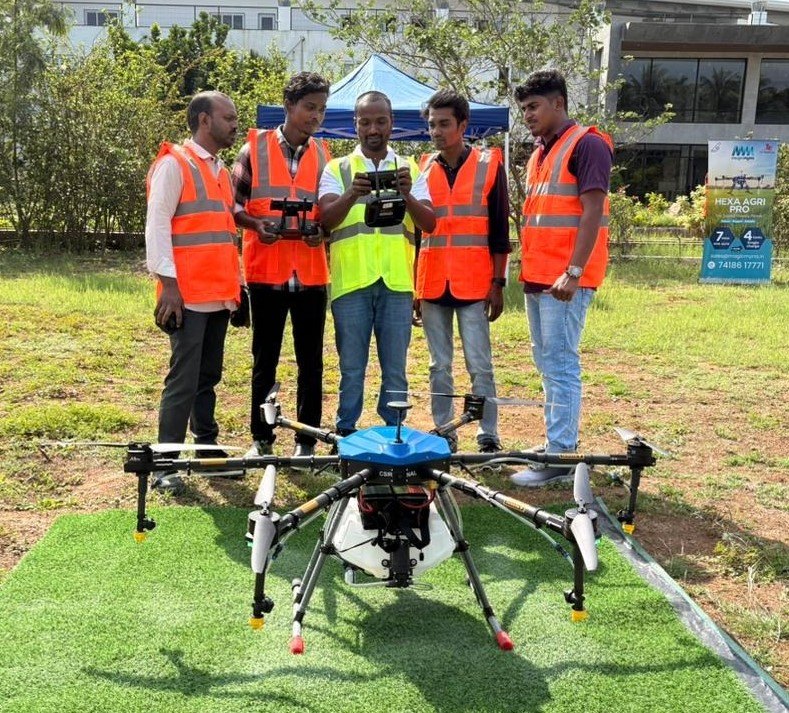
- Airframe, motors, propellers and batteries
- Radio link, GPS and flight modes
- Battery care and transport
- Basic fault finding
Practical content
Hands-on training
- Simulator practice before the first real flight
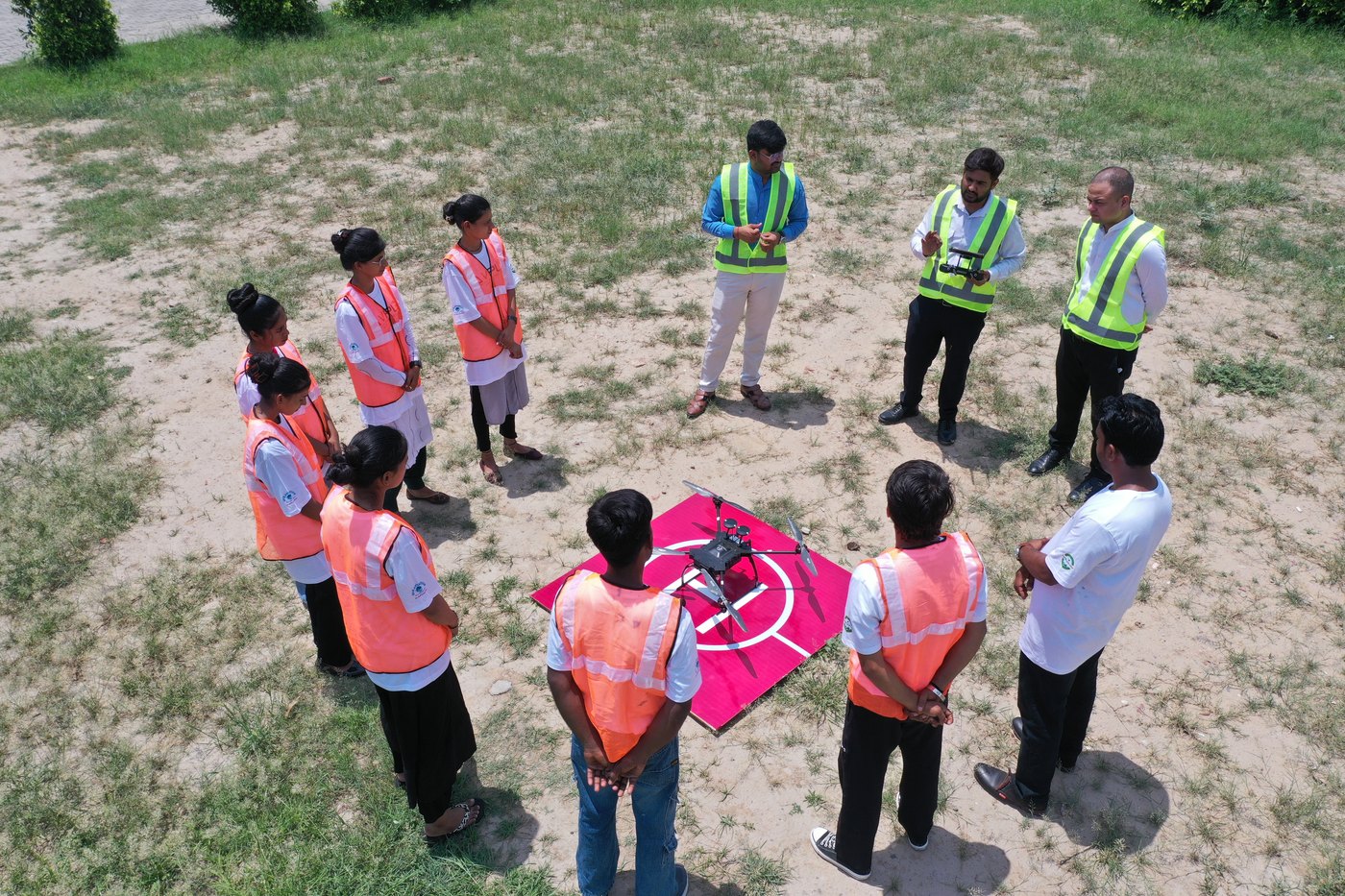
- Take-off, hover, orbit and landing exercises
- Figure-of-eight and obstacle course
- Emergency drills: signal loss, low battery, GPS drift
Assessment
How you are assessed
- Multiple-choice theory test
- Practical flight test scored by the instructor
- Logbook and checklist review
Prerequisites
Before you join
- Age 18 to 65 for the remote pilot route
- Class 10 pass (or equivalent)
- Able to read and understand English instructions
- Medical fitness to fly
India context
What to know in India
- Nano and some micro non-commercial flying has lighter rules; commercial work and higher categories need a remote pilot certificate issued by an approved training organisation
- Register the aircraft and the pilot on Digital Sky before operating
- Respect no-fly areas near airports, borders and sensitive sites
Drone rules in India are issued by the Directorate General of Civil Aviation (DGCA) and managed through the Digital Sky platform. They change from time to time, so IDA admissions confirms the current requirement for your category and operation at enrolment.
Careers
Roles this course supports
Photography and videography pilotSurvey assistantAgri-drone operatorInspection assistant
Certification
What you receive
IDA course certificate and support for the DGCA remote pilot certificate route. Certificates are issued by International Drone Academy, part of World Skill University and powered by AIESF and WSSH Australia. Where a regulator licence or permission is also required, IDA explains the steps at enrolment.
Questions
Frequently asked
Do I need my own drone?
No. IDA provides training aircraft and simulators. You can bring your own drone for extra practice.
Is the course taught in Hindi?
Yes, wherever the academy has Hindi-speaking instructors. Ask at enrolment for your city.
What comes after this course?
Most learners add a small-category course, an industry module such as spraying or inspection, or the night and BVLOS endorsements.
Where and when does it run?
Batch dates and academy locations change through the year. Send an enquiry and admissions will share the next start dates for your city.
How do I enrol?
Use the enquiry form on this page, or email admin@internationaldroneacademy.org.